Client Support: (866) 437-6325
Sales Inquiries: (855) 788-4805

Cybersecurity
Keep your business protected with cybersecurity built around prevention, detection, and practical risk reduction.
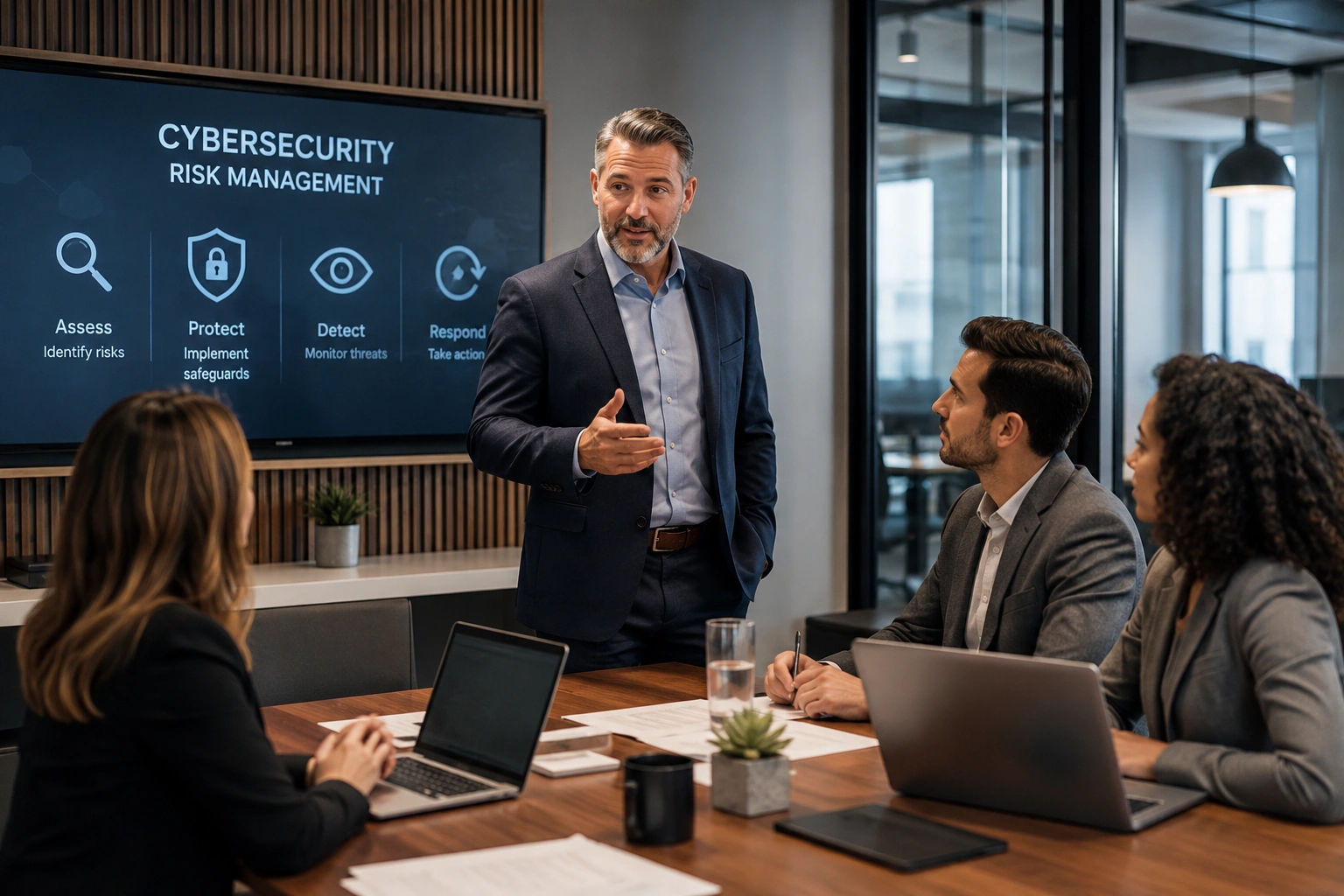
Protecting Your Business Takes More Than Antivirus
Without cybersecurity services, many businesses rely on basic antivirus and hope it is enough. Phishing emails, compromised accounts, suspicious activity, and ransomware can go unnoticed until files are locked, data is exposed, work stops, and recovery becomes expensive.
Our cybersecurity services help businesses in Wisconsin protect users, devices, accounts, and data with stronger safeguards. We review risks, manage endpoint protection, strengthen access controls, monitor threats, support employee awareness, and help prepare recovery steps so security is handled with more structure and less guesswork.
What Cybersecurity Covers for Your Business
Endpoint protection is managed across every workstation and laptop in use.
Multi-factor authentication enforced across email and key business accounts.
Email security filtering designed to catch phishing before it reaches staff.
Security awareness training so employees recognize threats and report them.
Patch management keeping devices current across operating systems and software.
Backup and disaster recovery with tested restores so recovery is possible.
Ongoing monitoring to catch unusual activity before it becomes an incident.
How We Build Your Cybersecurity Plan
Cybersecurity isn't something you set up once and check off the list. It requires an initial assessment, a layered set of controls, and ongoing management as your business and the threat environment both change. Here is how we approach it for businesses across Wisconsin.

Risk Assessment
Before recommending anything, we review your current environment for gaps. We look at your devices, accounts, email setup, and backup situation. What we find shapes everything we do next, and it gives your business a clear picture of where the exposure actually is.

Layered Protection
Effective cybersecurity for businesses in Wisconsin requires multiple layers: endpoint protection on devices, access controls on accounts, filtering on email, and monitoring across the environment. No single layer catches everything, which is why each layer has to be in place and working together.

Staff Training
Most security incidents start with a person, not a technology failure. Employees who know how to recognize a phishing email, handle suspicious links, and report odd behavior are one of the most effective cybersecurity controls a business in Wisconsin can have. We provide training that is practical, not lecture-based.

Backup and Recovery
When your business needs to evaluate a new tool, change a vendor, or upgrade a platform, IT consulting gives you an objective perspective. We look at what fits your environment, not what's trending. Businesses across Wisconsin get recommendations tied to their specific setup, not a generic list.
When Cybersecurity Becomes Obvious Too Late
Many businesses in Wisconsin think cybersecurity is handled because they have antivirus installed. The problem is that cyber threats do not always start with a virus. They often start with a fake email, a stolen password, a weak login, or an employee account that was never fully secured. Antivirus may help with some threats, but it does not cover every way attackers try to get in.
That gap can spread quickly. One clicked link can lead to a stolen email account, exposed files, payment fraud, or ransomware. Without cybersecurity services watching the bigger picture, businesses may not notice the problem until work is already interrupted. Strong cybersecurity gives your team layers of protection, not just one tool to rely on.
What Sets Our Cybersecurity Services Apart?
Good cybersecurity starts with understanding how your business is actually set up. We begin by reviewing your devices, users, email, access controls, endpoint protection, backups, and current security practices. That gives us a clear view of where your business in Wisconsin is protected, where the gaps are, and which risks need attention first.
From there, we put practical safeguards in place and help manage them over time. That can include stronger login protection, endpoint security, threat monitoring, staff awareness, backup readiness, and incident support when something looks wrong. Our role is to help your business reduce risk with security that is maintained, understandable, and built around the way your team works.
What Cybersecurity Does for Your Business
Protection from Common Threats
Ransomware, phishing, and account takeovers are the most frequent attacks businesses in Wisconsin face. Cybersecurity controls like endpoint protection, email filtering, and multi-factor authentication are specifically designed to interrupt those attacks at each stage. When the layers are in place and managed properly, most threats are stopped before they reach your team. Our cybersecurity approach covers each of those entry points so businesses aren't relying on one layer to catch everything.
Staff Who Know What to Watch For
Employees are part of the cybersecurity equation whether they know it or not. An untrained team will click links, share credentials, and bypass security controls without realizing the risk. Security awareness training gives staff in Wisconsin the context they need to recognize a threat, report it, and avoid becoming the entry point for an incident. Our cybersecurity training is practical and relevant, not a once-a-year compliance exercise.
Recovery When Things Go Wrong
No cybersecurity program eliminates all risk. What separates businesses that recover quickly from those that don't is whether backup and recovery procedures were tested before they were needed. Our cybersecurity work includes verified backup configuration and a documented response approach so businesses in Wisconsin know what happens next if an incident does occur. Recovery from a cybersecurity event doesn't have to mean starting from scratch.
Compliance That Doesn't Catch You Off Guard
Businesses in Wisconsin across healthcare, manufacturing, retail, and financial services face compliance requirements tied to how they protect data. Documented cybersecurity controls, access policies, and regular reviews keep businesses ready for audits, insurance renewals, and customer security questionnaires without having to scramble. Our cybersecurity approach builds the documentation and the controls together so compliance is a byproduct of good security, not a separate project.
Get in Touch
If your business in Wisconsin doesn't have a clear cybersecurity plan, or if your current setup hasn't been reviewed in a while, it's time for a conversation. As your IT company, we work with businesses across Wisconsin to assess their security posture and put practical protections in place. Contact us today to start with a risk review.
We offer IT Services in Wisconsin that extend beyond cybersecurity, including managed IT services, IT support, and MSP coverage for businesses that want a consistent technology partner. Reach out through our contact form or call us and we will get back to you the same business day.
Frequently Asked Questions About Cybersecurity in Wisconsin
Do I need cybersecurity services if my business already has antivirus?
Yes, antivirus is only one part of cybersecurity. It may help block some threats, but it does not fully protect against stolen passwords, phishing emails, weak logins, unsafe access, or ransomware risk. Our cybersecurity services help Wisconsin businesses build stronger layers of protection beyond a single tool.
What cybersecurity services does my small business need?
Most small businesses need cybersecurity services that cover endpoint protection, email security, multi-factor authentication, software updates, access control, employee awareness, backups, and threat monitoring. We review your Wisconsin business first, then recommend the protections that make sense for your actual users, systems, and risks.
How do I know if my business is at risk for a cyberattack?
If your business uses email, stores customer data, accepts payments, uses cloud tools, or has employees logging into business systems, there is cybersecurity risk. We help Wisconsin businesses understand where that risk exists by reviewing accounts, devices, access, backups, and current protections before recommending next steps.
Can cybersecurity services help protect my business from phishing emails?
Yes, cybersecurity services can help reduce phishing risk through email filtering, staff awareness, stronger login protection, and better account security. We help Wisconsin businesses lower the chance that one fake email turns into a stolen password, exposed data, or a larger business disruption.
What happens if my business gets hit by ransomware?
If ransomware affects your business, the response depends on your backups, security controls, and recovery plan. We help Wisconsin businesses prepare before an incident by reviewing backup readiness, strengthening endpoint protection, improving access controls, and helping create a clearer path for recovery if ransomware occurs.
© Copyright 2026 Dependable Solutions. Built with MSP Sites | Privacy Policy | IT Policy | Areas We Serve
Areas We Serve

