Client Support: (866) 437-6325
Sales Inquiries: (855) 788-4805

VoIP Phone Systems for Businesses Across the Midwest
We help businesses move to VoIP phone systems that make calls easier to manage, support remote work, and keep teams connected without relying on outdated phone lines.
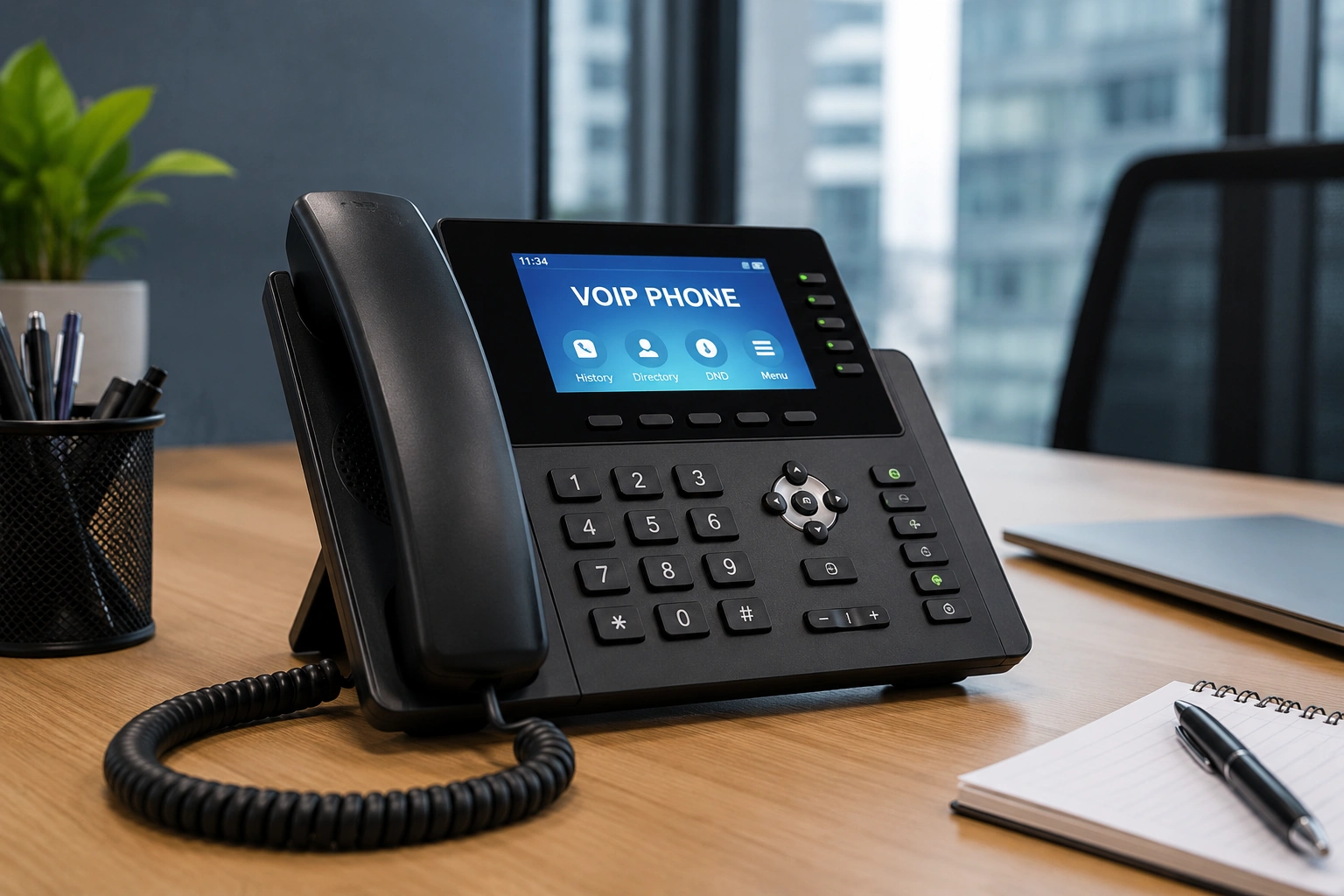
Make Business Communication Easier to Manage
When a business still relies on an old phone system, simple communication can become harder than it should be. Calls may only ring at one desk, remote employees may miss important conversations, adding a new user can require extra service calls, and customers may get transferred around or sent to voicemail when the right person is not available. Over time, the phone system starts slowing communication instead of supporting it.
VoIP phone systems help make business calls easier to manage. Calls can be routed to the right person or department, employees can answer from different devices, voicemail can be easier to access, and adding or changing users becomes more flexible. We help set up and configure the system around how your team works so your phone system supports daily operations instead of creating extra steps.
How VoIP Makes Business Calls Easier to Manage
Call routing and auto-attendant setup so callers reach the right person or department.
Extensions that work on desk phones, laptops, and mobile devices from any location.
Voicemail-to-email delivery so messages don't sit unheard at an empty desk.
Ring groups that distribute calls across your team when one person is unavailable.
Number porting so your business keeps its existing phone numbers after switching.
Call queuing that manages hold situations without sending callers to voicemail.
A system that adds users and locations through configuration, not hardware orders.
How VoIP Phone Systems Work for Your Business
VoIP phone systems work because they separate your communication tools from physical phone infrastructure. Everything is configured, managed, and updated in software. The four areas where that makes the biggest practical difference are covered below.

Call Routing and Management
Good call routing means callers get to the right person without being transferred twice. We set up auto-attendants, ring groups, call queues, and business hour rules so incoming calls are handled consistently whether your team is in the office or working remotely across the Midwest.

Remote and Mobile Access
VoIP phone systems aren't tied to a desk or a building. Staff access their extension from their desk phone, a laptop app, or their mobile device. When someone is traveling, working from home, or visiting another office, their work number stays with them and calls reach them the same way.

System Setup and Onboarding
We handle the full setup: number porting from your existing carrier, extension configuration, voicemail setup, and hardware installation where needed. We also train your team so they know how to use the features available to them from day one, not six months in when someone finally asks.

Ongoing Support
VoIP phone systems need the same attention as any managed IT environment. As your local IT services provider, we monitor performance, apply updates, and handle changes as your team grows or your call handling needs shift. You have a direct line to IT support when something isn't working as expected.
When Outdated Phones Make Communication Harder
When a business relies on an old phone system, calls can become harder to manage than they should be. Phones may ring at empty desks, remote employees may miss client calls, adding a new user may require extra equipment, and customers may have a harder time reaching the right person. These small problems can add up to missed opportunities, slower response times, and more frustration for both staff and customers.
Older phone systems can also become expensive to maintain. Separate phone lines, hardware repairs, technician visits, and replacement parts can quietly add to monthly costs. When something breaks, the business may have to wait for repairs instead of making a quick change, which can slow communication when it matters most.
Why Choose Our VoIP Phone Systems?
A VoIP phone system should match how your business actually handles calls. We start by looking at how your team communicates today, where calls are getting missed, how customers are routed, and what your staff needs from the system. This helps us recommend a setup that fits your business instead of forcing your team into a default phone configuration.
From there, we help configure call routing, extensions, voicemail, number porting, user access, and device setup. We also support your team during the transition, provide basic training, and stay available after go-live so changes like adding users, updating call flows, or supporting remote staff can be handled without turning into a major project.
What a Better Phone System Helps You Improve
Communication Costs Come Down
Traditional phone lines carry per-line charges, hardware maintenance costs, and periodic equipment replacement. VoIP phone systems consolidate communication onto your existing internet connection and replace unpredictable expenses with a consistent monthly cost. Businesses across the Midwest that switch to VoIP phone systems typically see a meaningful reduction in what they spend on phone service each month.
Calls Reach Your Team Anywhere
Staff who work from home, travel frequently, or split time between locations stay reachable on their work number without forwarding calls to a personal phone. VoIP phone systems route calls to whatever device an employee is using. Across the Midwest, businesses with distributed teams use this capability to stay connected without asking staff to manage multiple numbers or juggle separate devices.
The System Grows with Your Business
Adding a new employee to a traditional phone system means ordering hardware, waiting for delivery, and scheduling installation. With VoIP phone systems, adding a user is a software configuration. The same is true for adding a location, adjusting call routing, or changing business hours. The system adapts to the business rather than the other way around.
Call Handling Gets Organized
When calls arrive without a plan for handling them, they get missed, transferred incorrectly, or picked up by whoever happens to be nearby. VoIP phone systems include auto-attendants, ring groups, call queuing, and voicemail routing that bring structure to incoming calls. Businesses across the Midwest use these tools to make sure calls are handled consistently, regardless of who is in the office on a given day.
Frequently Asked Questions About VoIP Phone Systems
What is a VoIP phone system, and how does it help our business?
A VoIP phone system lets your business make and receive calls through an internet connection instead of traditional phone lines. We help set up a system that makes it easier to manage calls, route customers, support remote employees, and keep your team connected from different devices.
How is VoIP different from a traditional phone system?
Traditional phone systems usually depend on physical phone lines and older equipment. VoIP is managed through the internet, which makes it easier to add users, update call routing, change voicemail settings, and support employees who are not always working from the same desk.
Can our team use VoIP outside the office?
Yes. VoIP can help employees make and receive business calls from desk phones, computers, or mobile devices, depending on how the system is set up. This is especially helpful for remote staff, traveling employees, or teams that work across more than one location.
Can we keep our current business phone numbers?
In most cases, yes. We help with number porting so your existing business numbers can move to the new VoIP system. We plan that process carefully so customers can continue reaching your business with as little disruption as possible.
What equipment do we need for a VoIP phone system?
The equipment depends on how your team works. Some businesses use desk phones, while others use headsets, computers, or mobile apps. We review your current setup and help recommend the right mix of devices so your team has what they need without overcomplicating
© Copyright 2026 Dependable Solutions. Built with MSP Sites | Privacy Policy | IT Policy | Areas We Serve
Areas We Serve

